
TL;DR
Apple's iOS 27 lets users choose their AI model. Enterprises need the same freedom. How MCP and flexible deployment are reshaping enterprise AI.
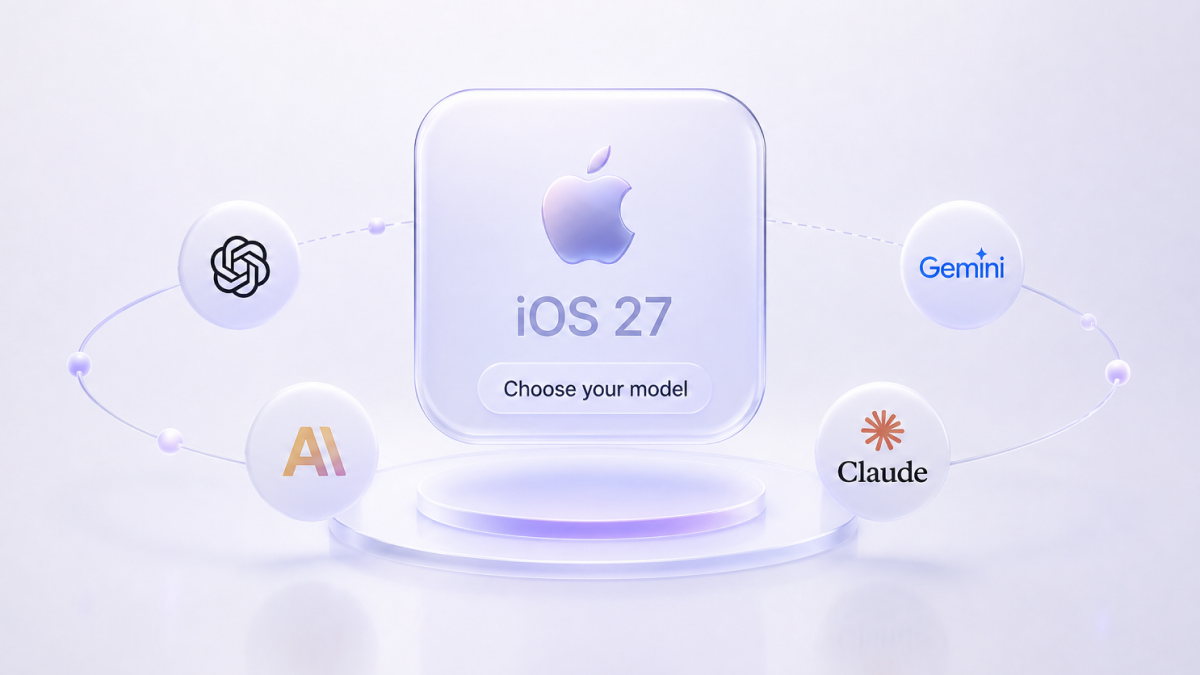
At WWDC 2026, Apple made a quiet but seismic announcement: iOS 27 will let users choose their preferred AI model. Claude, Gemini, ChatGPT, or Apple's own models. You pick. You switch. You decide what works best for each task.
It sounds obvious, right? Of course you should be able to choose your AI model.
But here's the thing: in the enterprise world, this kind of freedom has been virtually impossible. Most AI platforms still lock you into one model, one deployment method, and one vendor's infrastructure. You get what you're given, and you make it work.
Apple just normalized the idea that no single model wins at everything. The enterprise AI market is finally catching up.

What Apple Announced at WWDC 2026
During its Worldwide Developers Conference keynote on June 8, Apple previewed iOS 27, iPadOS 27, and macOS 27. The headline feature was a rebuilt Siri powered by what Apple calls "Siri AI," an entirely new version of its voice assistant.
But the more interesting detail was buried in the follow-up reporting. According to Bloomberg and confirmed by AppleInsider, iOS 27 will introduce an "Extensions" system that lets users select third-party AI models to power Apple Intelligence features like Writing Tools, Siri, and Image Playground.
Want Anthropic's Claude for text editing? Google's Gemini for image generation? OpenAI's GPT for answering complex questions? iOS 27 will support all of them. Users will even be able to assign different voices to different models so they can instantly tell which AI is handling their query.
Apple will also launch a dedicated App Store section listing compatible AI apps. The message is clear: the AI model market is becoming a marketplace, not a monopoly.
Apple's move signals a broader truth: no single AI model is best at everything. The era of one-vendor-fits-all is ending, both for consumers and for the enterprises that serve them.
Why This Matters for Consumers
For iPhone users, this is a quality-of-life improvement. You're no longer stuck with whatever Apple's model is best at. You can pick Claude for writing because it's sharper with nuance. You can pick Gemini for research because it has better access to Google's search graph. You can pick GPT for coding because, well, it's still very good at that.
Computerworld summed it up perfectly: "Let users pick the model, keep the experience."
This approach treats AI models like browsers or email clients. You have a default, but you can change it. Competition drives quality. Users benefit.
The Enterprise Version of This Problem
Now zoom out from consumer phones to enterprise AI deployments. The same question Apple just answered for consumers has been haunting IT leaders for years: why am I locked into one model?
Most enterprise AI platforms are built around a single LLM vendor. Your customer support, internal search, and data analysis all run on the exact same model. Even if a different model is better suited for a specific task, or an open-source option is more appropriate for sensitive data, you are completely locked in.
This rigid infrastructure is creating a massive operational bottleneck.
According to the Qualys 2026 AI Security Report, the inability to easily swap models has driven a major surge in unauthorized internal setups. Engineering and product teams who simply want the right tool for the job are increasingly using open standards like Model Context Protocol (MCP) to wire up their own custom connections.
That's exactly what happens when you restrict model choice. And it's happening at scale across enterprises right now.

MCP: The Protocol That Makes Model Choice Possible
Enter the Model Context Protocol, or MCP. If you haven't heard of it yet, you will. CIO Magazine declared it "suddenly on every executive agenda" in early 2026. The Linux Foundation launched MCPCon, a global conference series dedicated entirely to this protocol. Cloudflare, one of the world's largest internet infrastructure companies, called it "a core part of our AI strategy."
So what is MCP?
Think of it as the USB-C of AI. Before USB-C, every device had its own charger. Lightning, micro-USB, proprietary connectors. It was a mess. USB-C created a universal standard. One cable, any device.
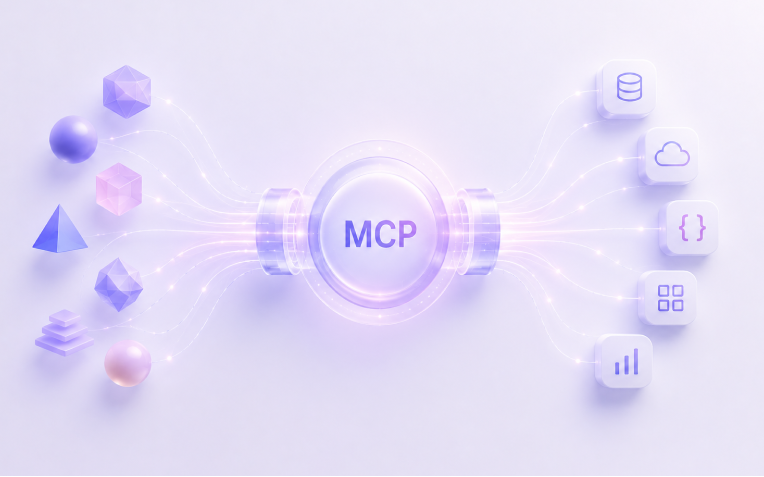
MCP does the same thing for AI agents and the tools they connect to. It's an open protocol that lets AI agents communicate with data sources, applications, and services through a standardized interface. Instead of building custom integrations for every model-to-tool connection, you build one MCP server, and any compliant model can use it.
For enterprises, this means something revolutionary: you can swap models without rebuilding your entire AI infrastructure. Want to switch your customer support agent from GPT-4 to Claude? With MCP, it's a configuration change, not a three-month engineering project.
Cloudflare's experience illustrates the scale. Within months of adopting MCP, employees across product, sales, marketing, and finance were using agentic workflows powered by MCP-connected tools. The protocol scaled from a single engineering team to the entire company because it removed the integration bottleneck.
Cloudflare deployed MCP across the entire company in months. Employees in product, sales, marketing, and finance were all building agentic workflows. The protocol scaled because it removed the integration bottleneck entirely.
The Three Layers of Model Freedom
Apple's iOS 27 announcement addressed one layer of model freedom: the ability to choose which model powers your AI features. Enterprises need all three layers.
Layer 1: Model Choice
Which LLM does your agent use? Can you switch between Claude, Gemini, GPT, Llama, Mistral, or domain-specific models depending on the task?
Most enterprise platforms still answer "no." You pick a vendor at procurement time, and you live with it for years. MCP changes this by decoupling the model from the infrastructure. Your agents connect to tools through a standard protocol. The model behind the protocol is swappable.
Layer 2: Deployment Choice
Where does your AI run? Public cloud? Private cloud? On your own servers? In a disconnected, air-gapped environment?
This is where the consumer conversation gets interesting. Apple runs its models partly on-device (for privacy) and partly in the cloud (for power). The user doesn't have to think about it. But enterprises absolutely have to think about it, because where your AI runs determines who can see your data.
Layer 3: Integration Choice
Which tools, databases, and systems can your AI agents access? Can they connect to your CRM, your ticketing system, your proprietary databases? Or are you limited to whatever integrations the vendor has built?
MCP addresses this layer too. An MCP server can wrap virtually any system. The protocol is tool-agnostic by design.

The Air-Gapped Revolution
Of the three layers, deployment choice is the one that's changing fastest right now.
In April 2026, Cirrascale Cloud Services announced a partnership with Google to deliver Gemini on-premises through Google Distributed Cloud. The offering packages Google's most advanced AI model into a Dell-manufactured hardware appliance with eight Nvidia GPUs, wrapped in confidential computing protections.
The model runs entirely in volatile memory. No persistent storage. Pull the plug, and the model vanishes. User session data clears automatically. If someone tampers with the appliance, it self-destructs and must be physically returned to the manufacturer.
It is full blown Gemini. Nothing's missing from it, and it'll be available in a private scenario, so that we can guarantee them that their data is secure, their inputs are secure, their outputs are secure. — Dave Driggers, CEO of Cirrascale
Why would anyone go to these extremes? Because certain industries can't afford to let their data touch public cloud infrastructure. Financial services firms face strict regulatory requirements around data residency. Healthcare organizations deal with patient records governed by HIPAA. Government agencies and defense contractors operate under classification levels that prohibit internet connectivity.
For these organizations, the question isn't "which model should I use?" It's "how do I use any modern AI model without violating every compliance rule I'm subject to?"
Air-gapped deployment answers that question. And it's not a niche concern. Gartner has predicted that "public Gen AI will cease to exist in 24 to 36 months," with organizations shifting toward specialized, closed-system AI they control. Arinox and Altos launched a plug-and-play air-gapped AI system in March 2026 targeting government and regulated sectors. The market for private AI infrastructure is growing fast.
Cirrascale's Gemini appliance: eight Nvidia GPUs, confidential computing, volatile memory only. Pull the plug and the model vanishes. This is what enterprise-grade AI deployment looks like when data security is non-negotiable.

Why One-Size-Fits-All Deployment Fails
The problem with a single deployment model is that different teams, different use cases, and different regulatory environments have wildly different requirements.
A 12-person startup building its first AI-powered customer support bot doesn't need an air-gapped server rack. They need something they can set up in an afternoon, connect to their helpdesk, and start resolving tickets. A managed cloud platform is perfect for them.
A multinational bank with 50,000 employees rolling out AI across compliance, risk analysis, and customer service needs something different. They need private cloud or on-premises deployment, SOC 2 compliance, role-based access control, and the ability to audit every model interaction. They might also need air-gapped deployment for their most sensitive use cases.
A government defense agency processing classified intelligence needs yet another variant: fully disconnected infrastructure, no external data flows, model updates delivered via physical media swaps.
The right answer isn't one of these. It's all of them, available as options, applied where they make sense. That's what “deployment freedom” actually means.
The Gartner Prediction That Should Scare Every CIO
Paul Furtado, Gartner analyst and vice-president, made a bold prediction about AI late last year: "I predict public gen AI will cease to exist in 24 to 36 months." He told BizTech Magazine that companies will shift toward specialized, closed-system AI "no different than your other business intelligence tools that you've brought in, where you control the data set and you control the learning algorithms."
This prediction sounds alarming until you realize it's already happening. McKinsey reports that 94% of employees are now familiar with gen AI tools, and many use them daily. But the Spiceworks State of IT Report found that only 24% of companies plan to establish accountability frameworks for AI, even as adoption has surged to 52%.
94% of employees use AI tools daily. Only 24% of companies have accountability frameworks in place. The gap between AI adoption and AI governance is widening fast, and it's where the next wave of enterprise risk is hiding.
The gap between adoption and governance is widening. Teams are deploying AI agents that connect to sensitive systems, process confidential data, and make autonomous decisions, all without the infrastructure or policies to manage the risk.
Private AI isn't a future trend. It's a present necessity. And the organizations that build the infrastructure for it now will have a massive advantage over those scrambling to catch up when regulation forces their hand.

How the Smartest Companies Are Solving This
The companies getting enterprise AI right share three characteristics.
They Standardize the Protocol, Not the Model
Instead of mandating "everyone uses GPT-4," they adopt MCP as their integration standard. Tools, data sources, and workflows are built once against the protocol. Models can be swapped, compared, and optimized per use case without touching the infrastructure layer.
Cloudflare's approach exemplifies this. Their centralized AI governance team built a shared MCP platform that lets employees deploy governed MCP servers in minutes. Every server inherits default-deny write controls, audit logging, CI/CD pipelines, and secrets management. The governance is baked into the platform, not bolted on after the fact.
They Match Deployment to Data Sensitivity
Not every workload needs the same security posture. Customer-facing chatbots can run in managed cloud environments. Financial analysis might require private cloud with enhanced audit trails. Classified intelligence processing demands air-gapped infrastructure with physical security controls.
The key insight is that this shouldn't be an all-or-nothing decision. A flexible platform lets organizations start with managed cloud for experimentation, graduate to private cloud for production workloads, and expand to on-premises or air-gapped deployment for their most sensitive use cases, all without rebuilding from scratch.
They Measure Outcomes, Not Token Counts
The tokenmaxxing trap is measuring success by how many tokens your AI processes. The right metric is business outcomes resolved. Did the agent resolve the ticket? Did it catch the compliance violation? Did it save the analyst three hours of manual work?
This shift in measurement philosophy drives better model selection too. When you measure outcomes, you discover that the cheapest model isn't always the worst, and the most expensive model isn't always the best. Different tasks have different optimal models.
The Shift From Vendor Lock-In to Composable AI
The thread connecting Apple's WWDC announcement, the rise of MCP, and the air-gapped deployment movement is the same idea: the era of vendor lock-in is ending.
Apple realized that no single AI model can be the best at everything. So they built a framework that lets users choose. Enterprises are arriving at the same realization. The difference is that enterprises need more than model choice. They need deployment choice. They need integration choice. They need the freedom to compose their AI stack from the best components for each use case.
This isn't just a technology shift. It's a procurement shift. A governance shift. An organizational shift. The companies that embrace composable AI will move faster, spend smarter, and manage risk better than those still locked into a single vendor's ecosystem.
What to Look for in an AI Platform That Gets This Right
If you're evaluating enterprise AI platforms, here are the questions that matter.
Can You Use Any Model?
The platform should support multiple LLM providers through an open protocol like MCP. You should be able to switch models per agent, per use case, or per department without rebuilding infrastructure. If the vendor locks you into their own model or a single partner, walk away.
Can You Choose Your Deployment?
The platform should offer multiple deployment options: managed cloud for quick starts, private cloud for regulated industries, on-premises for maximum control, and air-gapped for classified or highly sensitive environments. One-size-fits-all doesn't work in enterprise AI.
Can You Audit Everything?
Every model interaction, every tool call, every data access should be logged and auditable. If you can't trace what your AI agents did and why, you can't govern them. And if you can't govern them, you can't trust them with production workloads.
Can You Start Small and Scale?
The platform should let you begin with a single agent on managed cloud and expand to enterprise-wide deployment across multiple environments as your needs grow. Replatforming every time your requirements change is expensive and slow.
How Odin Has Been Doing This All Along
Here's the thing about everything we've discussed: it's not theoretical. These aren't aspirations or roadmap items. They're capabilities that have been shipping in production for a while now.
Odin was built on MCP from day one. Every agent connects to tools, data sources, and systems through the Model Context Protocol. That means you can use Claude for one task, Gemini for another, and an open-source model for a third, all within the same platform. No vendor lock-in. No three-month rewrites to switch models.
Odin also offers the full spectrum of deployment options. Small businesses can start with Odin's managed cloud platform, set up in minutes and connected to the tools they already use. Enterprises that need more control can deploy on public or private cloud infrastructure. Organizations in regulated industries, from finance to defense, can run Odin on-premises. And for the most security-sensitive environments, Odin supports fully air-gapped deployment where data never leaves the building.
This isn't a new feature or a recent addition. It's the architecture Odin was designed with from the start, because the team behind it understood something that the rest of the market is just now waking up to: enterprise AI demands freedom. Freedom to choose your model. Freedom to choose your infrastructure. Freedom to build agents that work the way your organization works, not the way a vendor wants you to work.
Apple made model choice a consumer feature. Odin made it an enterprise reality.
The Bottom Line
Apple's WWDC 2026 announcement wasn't just about letting iPhone users pick their favorite AI model. It was a signal that the entire AI industry is moving away from monolithic, vendor-controlled ecosystems toward composable, user-driven ones.
For enterprises, the implications are clear. The platforms that will define the next era of AI are the ones that treat model choice, deployment flexibility, and integration freedom as fundamental rights, not premium features. The era of “take what we give you” is over.
The question isn't whether your organization will adopt flexible AI infrastructure. It's whether you'll build that flexibility now, or scramble to add it later when your competitors have already moved.
Frequently Asked Questions
Sources
- Apple Newsroom. "Apple unveils next generation of Apple Intelligence, Siri AI, and more." June 8, 2026.
- Bloomberg. "Apple to Let Users Choose Rival AI Models Across Its iOS 27 Features." May 5, 2026.
- AppleInsider. "iPhone users will get to select a preferred AI model in iOS 27." May 5, 2026.
- CIO Magazine. "Why Model Context Protocol is suddenly on every executive agenda." February 24, 2026.
- Cloudflare. "Scaling MCP adoption." April 14, 2026.
- VentureBeat. "Google's Gemini can now run on a single air-gapped server." May 2026.
- Spiceworks. "What is private AI?" February 19, 2026.
- CRN Asia. "Arinox, Altos launch air-gapped AI system." March 24, 2026.
- Linux Foundation. "Agentic AI Foundation Announces Global 2026 Events Program." April 2, 2026.
- Business Wire. "Workato Accelerates Enterprise AI Adoption." February 5, 2026.
- McKinsey & Company. "The state of AI." 2025/2026.
All sources cited above are used for reference and attribution purposes. Content has been reviewed for accuracy at the time of publication.
Still have questions?
Get a live demo with an Odin AI solutions engineer — they'll build an AI agent for your specific workflow on the call.
Book a DemoYou might also like
 Engineering
What Is MCP? The Model Context Protocol Explained (And Why It's Changing Everything)
MCP is the open standard that lets AI agents connect to any tool or data source. Here's how it works and why it matters.
 Engineering
Tokenmaxxing Is Burning Your AI Budget. Here's How to Kill It.
Tokenmaxxing is the practice of treating AI token consumption as a proxy for productivity: the more tokens your agents burn, the more productive they seem. Uber exhausted its entire 2026 AI budget by April.